Showing posts with label egyptian recipes. Show all posts

Thursday, January 7, 2016

The Pyramids and Egyptian Rice Pilaf


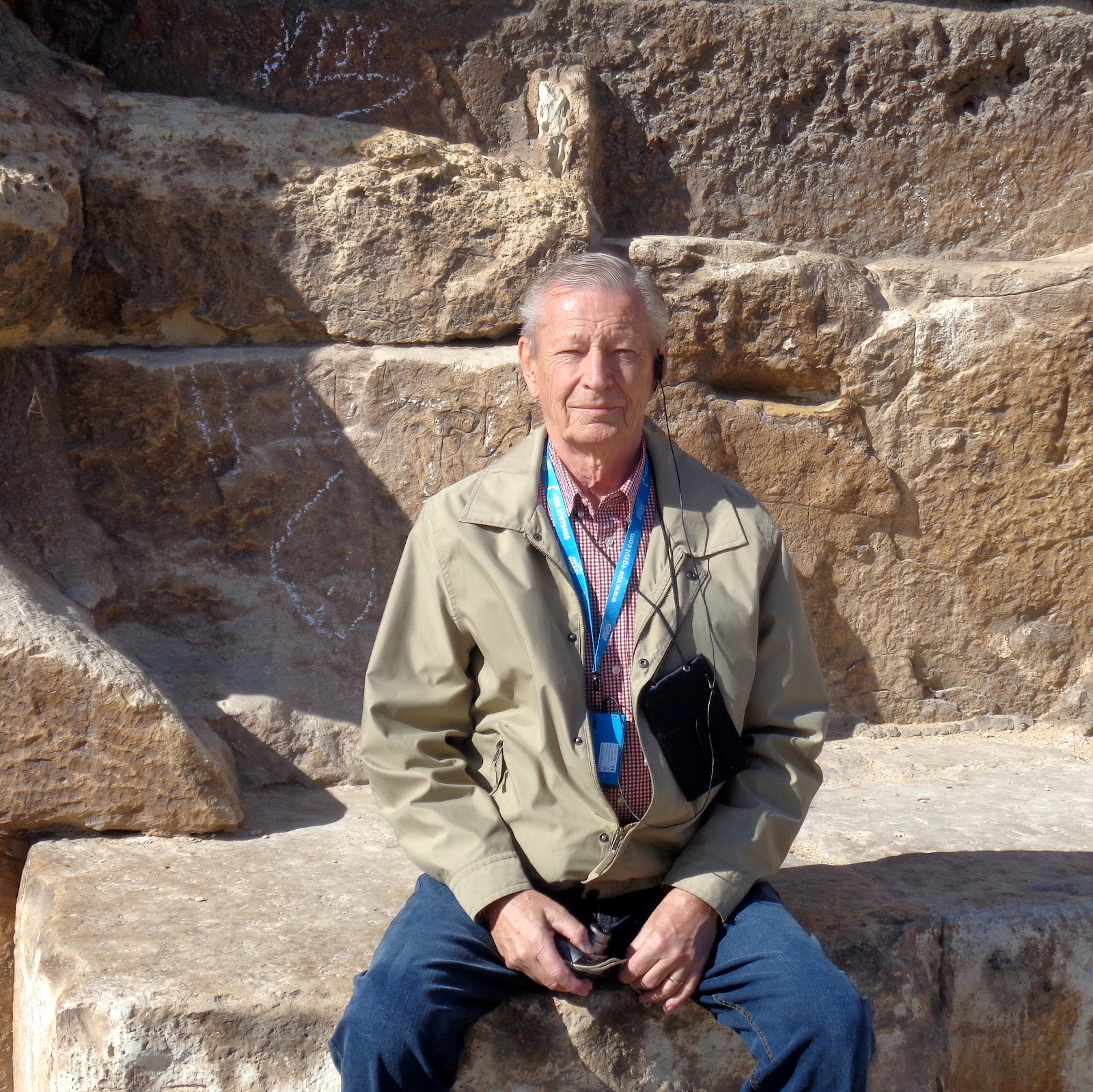
I don't want to bore you with pictures from our Egyptian adventure. You've seen photos of the antiquities for years, and I must admit mine are no more riveting than those you've seen a dozen times before. I'm tempted to say I have nothing new to offer, but that's not quite true. The problem is finding the words to describe the awe that engulfs you when you see these monuments and reflect on their age and size and the effort and intellect that was required to build them. Of all the monuments you've seen, I suspect the Pyramids most symbolize ancient Egypt. The Great Pyramid of Cheops and its two companions, collectively known as the Pyramids of Giza, sit just outside Cairo on a plateau that's called the Giza Necropolis. The area is unique because the Great Pyramid is the only one of the Seven Wonders of the Ancient World that remains intact. The tomb inside the Great Pyramid can be accessed by using the lower opening seen in the picture to the right. While it's quite an experience to be inside that huge mound of rock, there is little to see once you're in, and the hot, steep and narrow entrance is definitely not for the claustrophobic. Unfortunately, no photos can be taken inside the burial chamber, so you'll have to imagine what it's like. The room is small and dark and not at all like it's depicted in movies. I can tell you that you'll want to sit a spell if you decide to visit the burial chamber. While it's not a hard climb, the fetid air and poor light can quickly get to you and you'll appreciate the sun and fresh air waiting for you outside. While tonight's recipe is Egyptian, it's so simple that I decided to present it to you in pyramidal form to make it look a bit more important. The rice, called Ruzz Bi Shairie, is wonderful when served with grilled poultry or meat and I know you will enjoy it. Here is how it's made.


Wednesday, January 6, 2016

Egyptian Prayer Bumps and Ramadan Soup (Harira)


From the kitchen of One Perfect Bite...I hate to admit to being provincial, but there are times it is painfully apparent, even to me. While I've traveled through other Muslim countries, I must admit that prior to visiting Egypt, I had never seen, much less thought about, a zebiba. The zebiba is a black mark found on the forehead of devout Egyptian males. It resembles the smudge of ashes left on foreheads of Catholics on Ash Wednesday. It, however, is a permanent mark formed by hardened skin where the forehead touches the ground during Muslim prayers. A practicing Muslim’s forehead is meant to touch the ground, in symbolic submission to God's will, at least 34 times a day during prayer. The zeal with which this is done can affect the size and color of the mark. Some believe that light will emanate from the zebiba on the Day of Judgment to identify those who are truly devout. While some see the mark as a sign of devotion, others think it is a display of ostentatious piety. However, as Egyptians increasingly emphasize Islam as the cornerstone of identity, there has been a growing emphasis on public displays of piety that include the zebiba.

Muslim piety is marked in other ways as well. Ramadan is the ninth month of the Islamic calendar, and most adult Muslims fast from dawn to dusk every day during that month. A large evening meal is served to offset the daytime fasting, but a lighter meal, that includes a soup called harira, is served immediately after sundown to break the fast and fortify the observant until the large meal is served later in the evening. There are many versions of harira, but most of them use a combination of lentils and chickpeas that are cooked in a broth that includes tomatoes and spices. It is a pleasant soup and I think you might enjoy it. Here is a simplified recipe for harira.


Tuesday, January 5, 2016

Life Is....An All You Can Eat Buffet


From the kitchen of One Perfect Bite...Auntie Mame had it wrong. Life is not a banquet, it's an all you can eat buffet. While I hate to sound like a princess, even beautifully presented buffets can become tiresome when you have them day after day. The buffet was a nearly constant feature of our evening meals in Egypt. They were wedding scale extravaganzas, complete with hot and cold tables and dessert bars so long you could go into sugar shock if you even looked at them  too long. Our meals were wonderful, but, unfortunately, they were not Egyptian. As a matter of fact, you had to search to find Egyptian dishes tucked into the copious buffet selections. I had done a little food related homework prior to our trip, so I was more fortunate than most in that I could recognize the few Egyptian dishes on the buffet tables. A sparsity of native food is not uncommon when you travel with a group where the goal is to please most of the people most of the time. It can be overcome by breaking away from the group for cooking lessons or meals in restaurants where native food is served. The climate in Egypt was not conducive to individual exploration, so we "suffered" through nights of rib roast or beef Wellington, and when I came on them, I jumped on the odd Egyptian dishes that I found. The recipe I'm featuring tonight is for a dish that is served throughout the country. It is very popular with locals and recipes for it abound. I had it several times when we were in Cairo and Alexandria and, interestingly, while they shared the same ingredients, the dishes never tasted quite the same. The dish is koshari. Koshari (also spelled Koshary or Kushari) is the national dish of Egypt. It mixes lentils, macaroni noodles and rice into a single dish that is topped with a spicy tomato sauce, garbanzo beans and fried onions. The idea sounds strange…until you taste it. Then you’ll know why this dish is a favorite among Egyptians. Here is how it's made.

Related Posts with Thumbnails

Printfriendly